The Anne Frank Diary Case Just Made VPNs Official in the EU

A copyright ruling about one of the most-read books in history just told Europe's courts, in writing, that VPNs are legitimate. Here's the case — and why it matters for anyone using one.
The Diary of Anne Frank is one of the most widely read personal accounts of the Holocaust, translated into over 70 languages and taught in classrooms across the world. So it says something that, in 2026, this same diary ended up at the center of a case that reshaped how the EU's top court treats VPNs.
Here's what happened, and why VPN users everywhere have a reason to pay attention.
What the Anne Frank diary case was actually about
In 2021, Dutch and Belgian academic institutions published a free scholarly edition of Anne Frank's manuscripts online, hosted in Belgium. Because the diary is public domain in more than 60 countries but still under copyright in the Netherlands until 2037 — copyright held by the Anne Frank Fonds, the Swiss foundation set up by her father, Otto Frank — the site geoblocked visitors from the Netherlands.
The Anne Frank Fonds argued that wasn't good enough, since anyone in the Netherlands could still reach the site with a VPN, and took the case all the way to the Court of Justice of the European Union (CJEU).
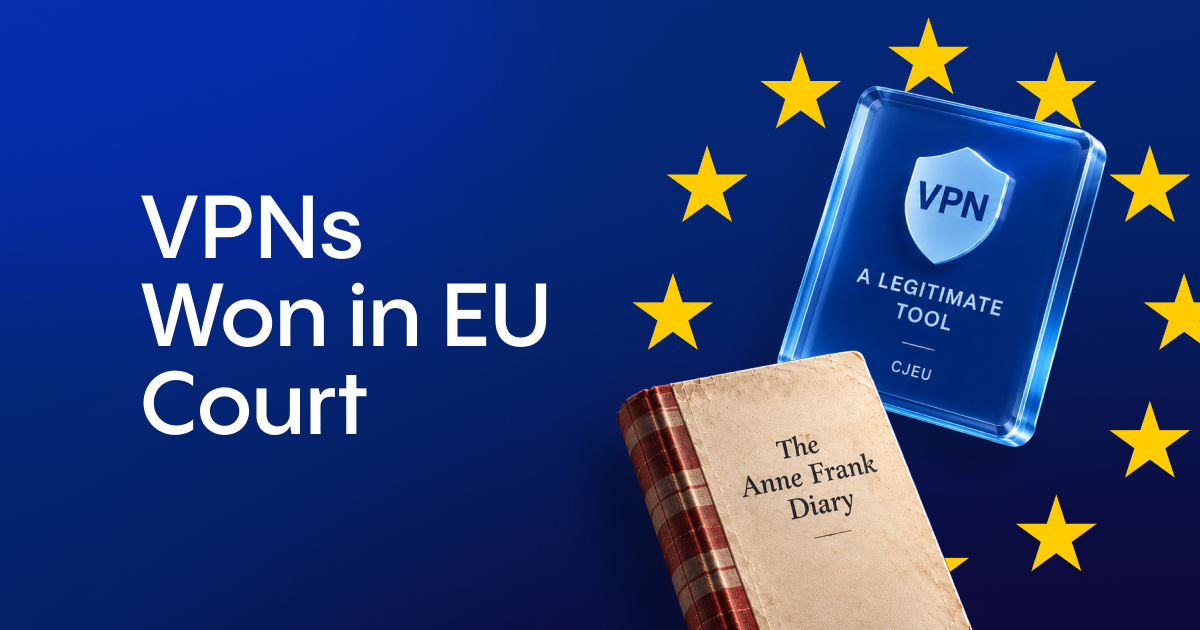
On 9 July 2026, the Court ruled (official press release) that geoblocking doesn't have to be unbeatable to be legally sufficient — "the possibility of such circumvention cannot, in itself and in all circumstances," make the safeguard inadequate. Publishers have to use reasonable, up-to-date protection. They don't have to build something no VPN could ever get through.
The part that matters if you use a VPN
Buried in a copyright ruling about a 1940s diary is a sentence that VPN users should actually care about: the Court described VPNs as "lawful technical tools which users may legitimately use."
That's the EU's highest court, on the record, saying a VPN isn't a workaround or a grey-area trick — it's a legitimate way to control how you connect to the internet. Responsibility for a geoblock staying effective sits with whoever put it up, not with the tool someone used to get around it.
It's a small sentence with a big effect: it undercuts the idea, floated in more than one European capital, that VPNs are inherently suspicious or purely built for dodging rules. According to the Court, that's simply not the case.
Why do you need a VPN?
The Anne Frank case was about copyright and geoblocking specifically. But it's a good excuse to answer the question a lot of people still ask: why do you actually need a VPN in the first place?
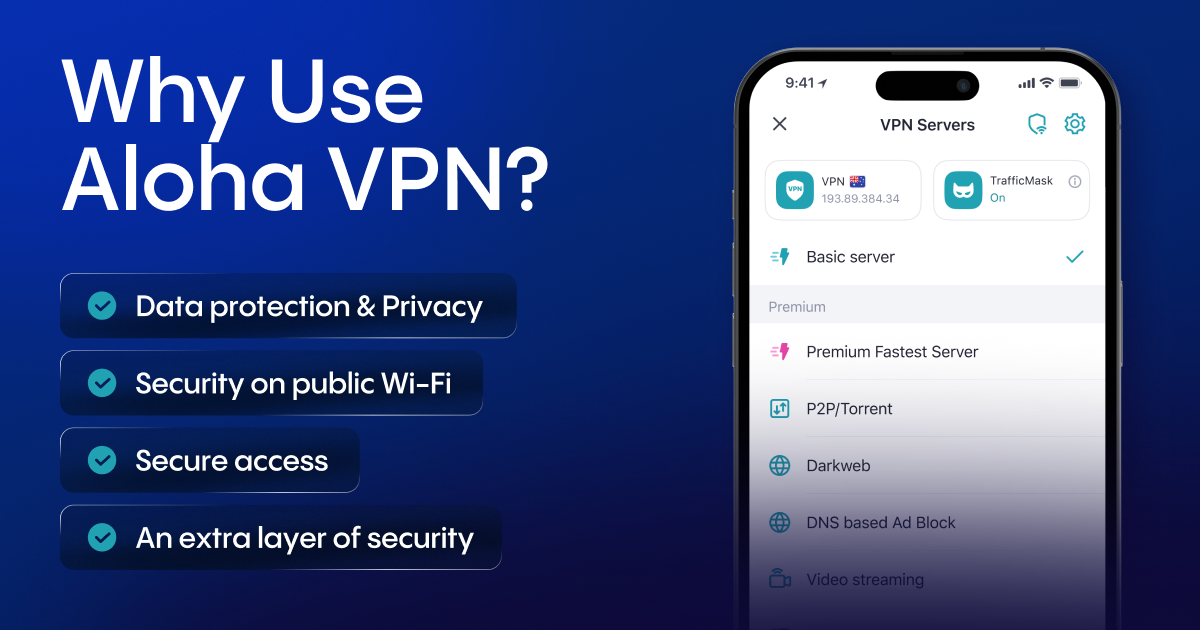
- Data protection. A VPN encrypts your internet traffic, so there's a lot less for anyone to intercept — your ISP, the network operator, or whoever else is listening in.
- Security on public Wi-Fi. Cafés, airports, hotels — public networks are exactly where your data is easiest to grab. A VPN closes that gap.
- Privacy. A VPN hides your real IP address, which makes it a lot harder for sites, advertisers, and trackers to build a picture of what you do online.
- Secure access. Instead of connecting to the internet directly, you're routing through a protected VPN server first.
- An extra layer of security. A VPN isn't a replacement for antivirus software or good habits — it's one more layer on top of them.
In short: a VPN makes your internet connection more private and more secure. Nothing mysterious about it — and now, nothing legally murky about it either.
This is exactly what Aloha VPN is built for
We didn't need a court to tell us VPNs were legitimate — Aloha has believed that since day one. Privacy is a right, not a privilege, which is why Aloha's VPN isn't locked behind a separate app or a separate bill: it's built directly into the browser, ready whenever you need it.
No block keeps you out, and you never pay extra to get through. Whether you're on public Wi-Fi, keeping your IP address to yourself, or just don't like the idea of your connection being anyone else's business — that's what Aloha's VPN is there for.
The EU just confirmed what we already knew. Might as well use it.
Update Aloha Browser on iOS or Android, turn on the VPN, and protect your connection — wherever you're browsing from.